
Natural vs Lab-Grown Diamonds: A B2B Supplier Perspective
The lab-grown diamond market has fundamentally changed B2B sourcing economics. Here is a clear-eyed look at the trade-offs from a supplier who has worked with both.
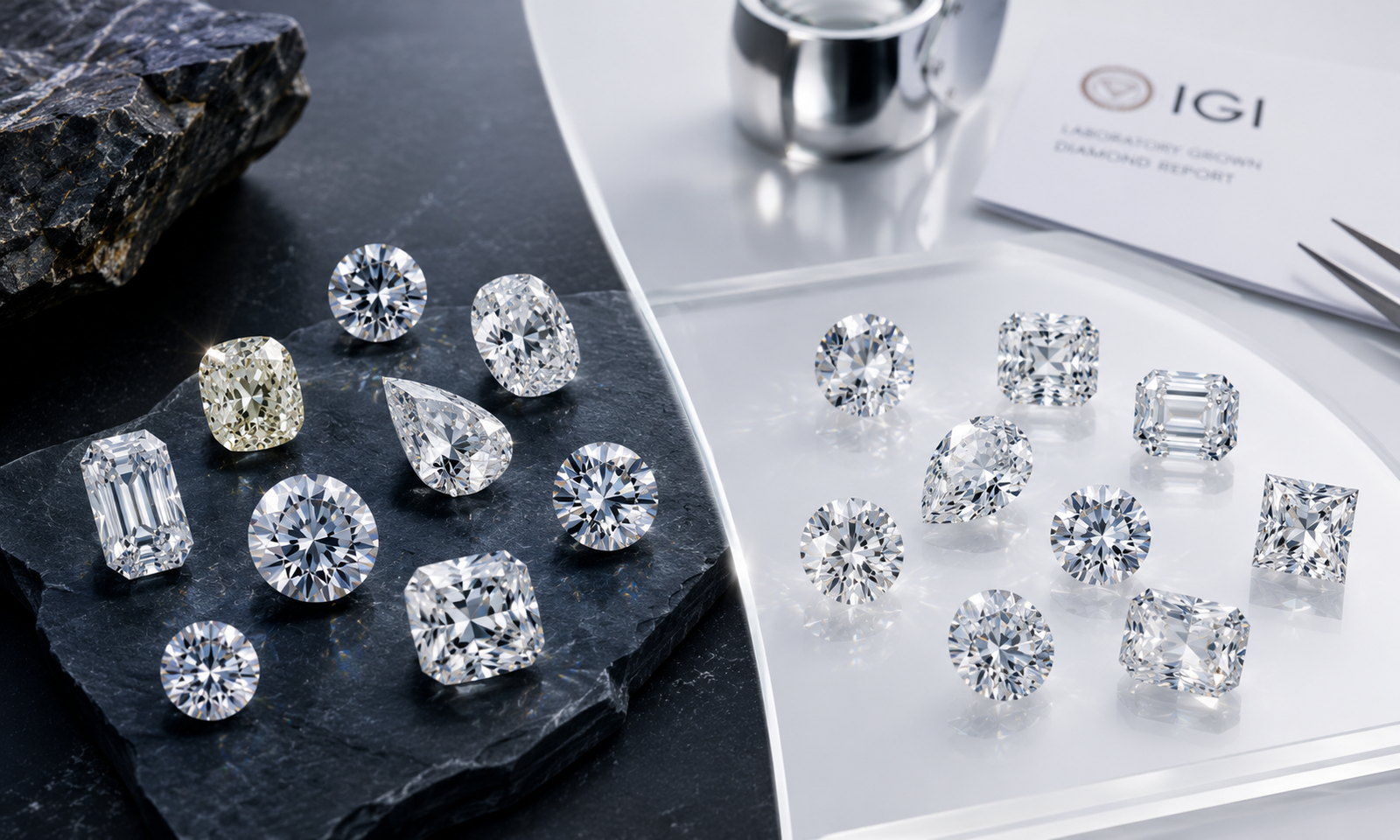
The debate between natural and lab-grown diamonds has largely settled in the trade — not because one has "won," but because they serve different market positions at different price points. Understanding where each belongs is the foundation of sound B2B sourcing strategy.
Price trajectory: the core difference
Natural diamond prices have remained broadly stable (with volatility) over decades, supported by controlled supply and consistent consumer demand for "rarity." Lab-grown diamond prices have fallen approximately 60–70% since 2018 as production efficiency improved and global capacity expanded — particularly from India and China.
This price compression is not a crisis for the trade. It is a repositioning. Lab-grown diamonds now occupy the volume-accessible tier, while natural diamonds command a premium positioned around geological origin and rarity. Both have sustainable markets.
Quality: no compromise at the top end
A well-produced lab-grown diamond is physically and chemically identical to a mined diamond. Type IIa CVD-grown stones — the production method used for the finest lab-grown material — can achieve D/FL grades indistinguishable from the rarest natural diamonds. For B2B buyers, this means lab-grown can meet any specification a natural stone can, at a fraction of the cost.
Supply chain advantages for B2B
Lab-grown supply is far more predictable than natural. You can specify exact parameters — shape, carat range, color, clarity, cut grade — and a capable manufacturer can deliver to that specification consistently. Natural diamonds require sorting through available inventory, with significant variation between parcels. For manufacturers running production lines or retailers planning collections, lab-grown's supply consistency is a genuine operational advantage.
Consumer perception in 2026
A 2025 survey of US and European fine jewellery consumers found that 58% of Millennials and Gen Z buyers would choose a lab-grown diamond over a natural diamond of equivalent quality, with the primary drivers being price and sustainability credentials. For B2B buyers supplying retail, this consumer sentiment shift is the most important market signal of the decade.
What Liora Diamond recommends
Stock both where your market supports it. For engagement ring-focused retailers, a lab-grown-primary range at accessible price points drives volume; a curated natural collection serves customers who specifically seek rarity. For manufacturers, lab-grown sourcing for your production line delivers the consistency and cost structure that natural cannot match at scale.