Why Diamond Certification Matters for B2B Buyers
Understanding IGI and GIA certification is not optional in serious B2B diamond sourcing — it determines pricing, insurability, and repeat business.
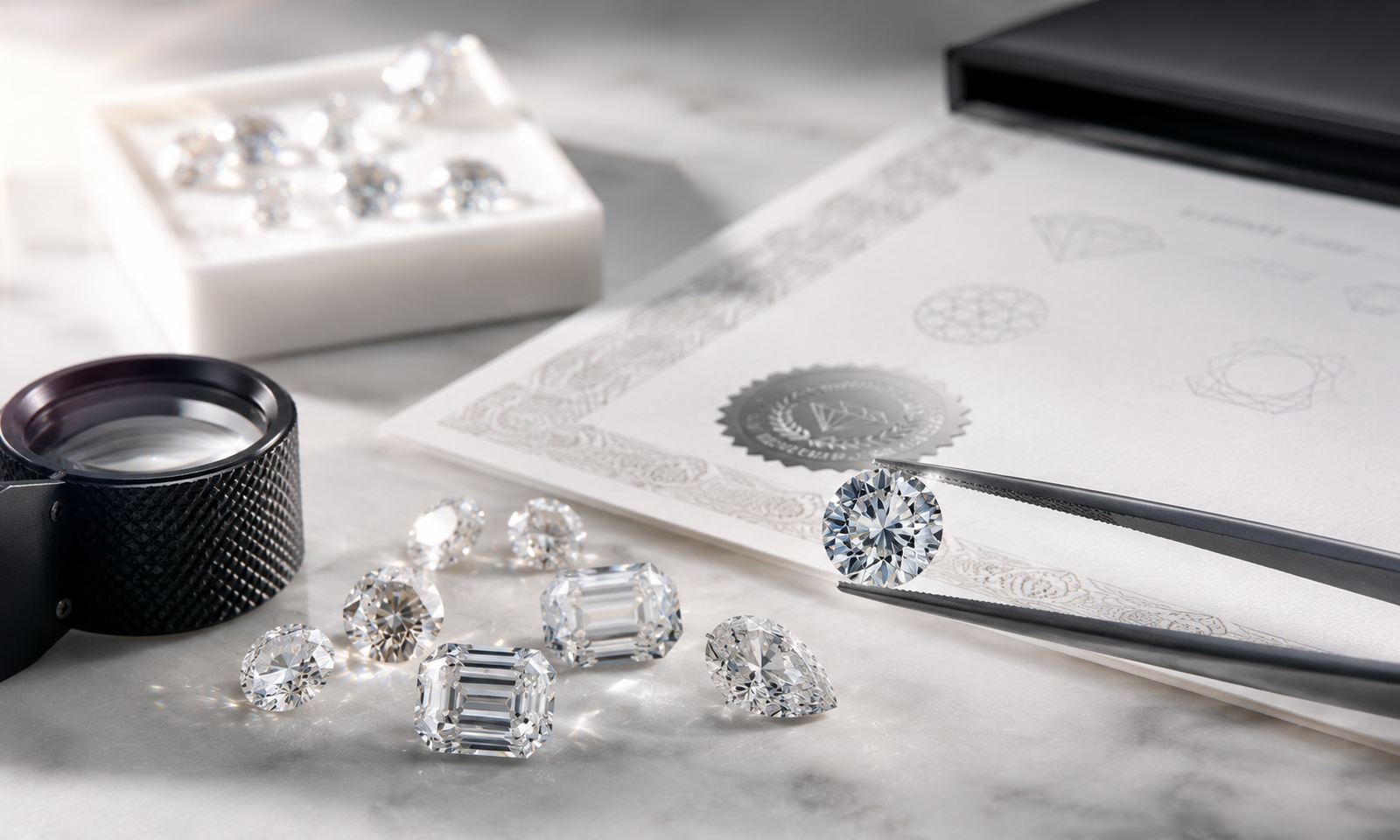
In the wholesale diamond trade, certification from a recognised grading laboratory is the single most important document in any transaction. Whether you are a retailer buying for your showcase or a manufacturer sourcing parcel goods, the certificate is your guarantee — and increasingly, your customer's guarantee too.
What a diamond certificate actually tells you
A diamond grading report from IGI or GIA provides an independent assessment of the four Cs: Carat weight, Color grade, Clarity grade, and Cut grade. For lab-grown diamonds, it also confirms the growth method (HPHT or CVD) and, for fancy colours, provides colour origin confirmation.
Beyond the four Cs, a quality report will include table and depth percentages, fluorescence grade, laser inscription number, and proportion diagrams. These details matter enormously in bulk B2B purchasing — two stones with identical four-C grades can have very different face-up appearances based on proportions alone.
Why certified diamonds command better prices
Uncertified diamonds are routinely discounted 15–30% in wholesale markets, because the buyer assumes the risk of grading discrepancy. When you buy certified, you are buying a known quantity — the same description holds whether the stone is on a desk in Surat, a showcase in New York, or a manufacturer's bench in Bangkok.
This price premium on certified goods is actually an advantage for reputable suppliers: it creates a floor that protects margins and signals quality to serious trade buyers.
IGI vs GIA for lab-grown diamonds
IGI (International Gemological Institute) has become the dominant certification body for lab-grown diamonds, particularly in the wholesale B2B channel. They have invested heavily in lab-grown grading infrastructure and turnaround times are consistently faster than GIA for manufacturers in India and China.
GIA certification carries prestige, particularly in the US and European retail market, and commands a modest price premium. For high-value single stones (1 ct+) destined for fine jewellery retail, GIA certification can justify the additional cost and time.
Liora Diamond supplies stones certified by both IGI and GIA, with IGI as our primary certification partner for ready-stock items.
Certification in make-to-order parcels
For B2B buyers purchasing calibrated melee or matched parcel goods, individual certification is rarely practical. In these cases, a batch report or a sample certification protocol (certifying a representative percentage of each parcel) is standard practice and accepted by most trade buyers. Always clarify the certification protocol before placing a parcel order.
Protecting your margins downstream
Your end customers — whether retail buyers, jewellery designers, or consumers — are increasingly educated. A certified lab-grown diamond with a clear origin story is easier to sell at full price than an uncertified equivalent. The certification is not just a document; it is a marketing tool that flows through your entire supply chain.
At Liora Diamond, every stone we ship comes with its original grading report. We never supply uncertified goods into our B2B channel. If you have questions about certification standards or want to request specific grading lab preferences for a make-to-order parcel, contact our team directly.