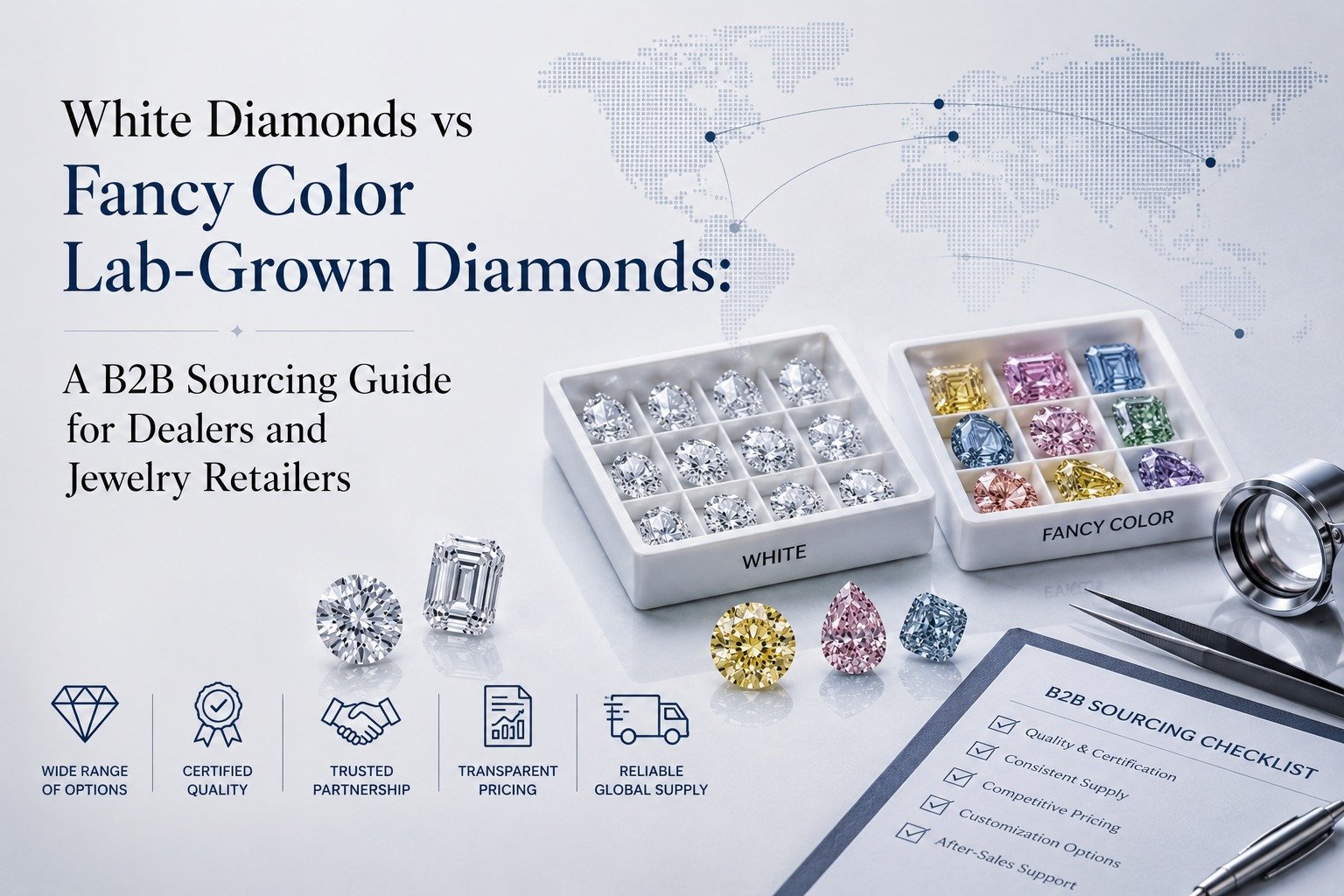
White Diamonds vs Fancy Color Lab-Grown Diamonds: A B2B Sourcing Guide for Dealers and Jewelry Retailers
White diamonds or fancy color lab-grown diamonds—which should you stock? This B2B sourcing guide breaks down demand, margins, and buying strategy for dealers and jewelry retailers, Choosing between white diamonds and fancy color lab-grown diamonds isn't just a matter of taste—it's a sourcing decision that affects your margins, inventory turn, and customer differentiation. This B2B guide compares both categories across demand trends, certification requirements, pricing strategy, and supplier considerations, helping dealers and jewelry retailers decide where to invest their next order
 ```html
White Diamonds vs Fancy Color Lab-Grown Diamonds: A B2B Sourcing Guide for Dealers and Jewelry Retailers
If you buy diamonds to resell, not to wear, the "white vs colored" conversation looks nothing like it does on a bridal blog. You're not choosing between two pretty options. You're deciding how to allocate purchase order budget, which SKUs turn over fastest in your market, and which supplier can back up a reorder six months from now with the same consistency as the first parcel. This guide explains white diamonds and colored lab-grown diamonds specifically from that angle: margin, sell-through, certification, and what actually happens when you place a wholesale order.
White Diamonds: The Volume Engine of Wholesale Lab-Grown Inventory
In the trade, "white diamond" refers to any stone on the GIA/IGI D-to-Z scale, colorless through faint yellow. This is the backbone SKU category for almost every jewelry retailer, because it's what walk-in and online customers default to when they picture an engagement ring or a tennis bracelet.
For dealers, colorless lab-grown diamonds offer three things fancy colors can't match at the same scale:
Predictable specification
You can order a defined shape, carat weight, color, and clarity combination and expect it to be repeatable across future purchase orders.
Faster inventory turnover
White stones move through retail display cases and e-commerce listings faster because demand isn't dependent on educating the customer about rarity or color grading.
Deeper stock depth
Because production volume is higher, a supplier with strong round brilliant inventory can usually fill larger parcel orders on shorter notice than they can for fancy colors.
If your business model leans on repeat B2B orders for replenishing a retail case, stocking a manufacturing line, or fulfilling a custom order pipeline, white diamonds are where your working capital should sit first. Popular diamond cuts like princess cut, oval cut, cushion cut, and emerald cut each carry slightly different regional demand patterns worth tracking against your own sell-through data.
Fancy Color Lab-Grown Diamonds: The Margin Play
Fancy color diamonds sit entirely outside the D-to-Z scale. Pink, blue, yellow, red, black, brown, and green stones are graded on intensity from Fancy Light through Fancy Vivid, because the color itself is the value driver, not the absence of it. What matters for a dealer is that lab-grown production has made these colors commercially viable for retail in a way natural fancy colors never were. Natural fancy color diamonds are exceptionally rare and priced accordingly.
That gap is exactly where wholesale opportunity lives right now:
Higher margin per carat
A well-matched parcel of fancy color diamonds, particularly vivid yellows and pinks, commands a retail premium that white stones of comparable carat weight rarely reach, while lab-grown production cost keeps your buy-in price manageable.
Differentiation from competitors
If every retailer in your market is stocking the same white diamond ranges, a curated fancy color case becomes a genuine point of difference for your storefront or catalog.
Growing consumer demand
Younger buyers are actively seeking colored stones for engagement rings and statement jewelry instead of defaulting to colorless. This is a trend worth building into next season's buying plan.
The trade-off dealers need to plan for: color consistency across a parcel matters importantly to your own customers, and sourcing enough matched stones for a cohesive collection is harder than sourcing white melee at volume.
Price and Margin Comparison for Wholesale Buyers
| Factor | White Lab-Grown Diamonds | Fancy Color Lab-Grown Diamonds |
|---|---|---|
| Typical sell-through speed | Fast, consistent demand | Slower, depends on market education |
| Per-carat wholesale cost | $250-$900, especially in common color/clarity ranges | $300-$1,000, depends on the 4Cs grades |
| Retail margin potential | Steady, competitive market | Often higher on vivid intensities |
| Parcel consistency needed | Moderate | High — color matching is critical |
| Best for | Volume replenishment, bridal core range | Signature collections, higher-ticket pieces |
Most experienced buyers don't choose one category over the other. They allocate purchase budget across both, using white diamonds to keep inventory moving and fancy colors to lift average order value and differentiate their catalog.
Which Should You Stock? A Buying Strategy, Not a Preference
Ask these questions before your next purchase order:
What's your current sell-through velocity on white vs. colored SKUs? If you don't know, that's the first gap to close before expanding a fancy color range.
Does your customer base respond to storytelling? Fancy color diamonds sell better when your sales team or product copy can explain intensity grading and rarity. White diamonds largely sell themselves.
Diamond size matters: A 1-carat round diamond generally has a 6.50 mm size, and for a 2-carat it's 8.10 mm. Even with smaller sizes, the range starts from 0.80 mm to 5.00 mm. Select it as per your jewelry manufacturing requirements, as every diamond shape carries a different size.
Can your supplier deliver repeatable parcels? This matters more for fancy colors than white, since color-matching a case or collection depends on it.
What's your customs and certification workflow? Every stone in either category should ship IGI or GIA-certified and laser-inscribed; anything less complicates resale and insurability for your clients.
Following these steps helps you to get genuine lab-grown diamonds in bulk quantity for your retail jewelry brand.
The Part of the Buying Experience Most Suppliers Never Talk About
We know that in white and colored diamond comparison, grading charts and price range matter. But in a wholesale lot of loose stones, whether you keep reordering from the same supplier a year from now comes down to three things almost nobody writes about:
Parcel-to-parcel consistency
The single biggest complaint dealers have about wholesale diamond sourcing isn't price; it's that a reorder six months later doesn't match the original. Colored stones especially drift in tone between production batches unless a supplier actively curates for consistency. Ask any potential supplier how they match repeat parcels before you commit budget, not after a mismatched shipment lands.
Response speed on quoting
In a trade where margins are won or lost on turnaround, a supplier who takes three days to quote a parcel is costing you sales while you wait. Live stock visibility and same-day quoting (Liora Diamond typically responds to WhatsApp enquiries within 1-2 hours) is an operational advantage that directly affects how fast you can confirm a customer order.
Documentation that clears customs the first time
Every delay at