Wholesale Fancy Colored Lab-Grown Diamonds: Complete Guide to Follow
Wholesale fancy colored lab-grown diamonds are transforming the jewelry market. Discover key insights on grading, pricing, and sourcing to help you buy smarter and more profitably, Fancy colored lab-grown diamonds—in shades of pink, blue, yellow, and green—are quickly becoming a favorite among wholesale buyers looking for affordable, ethical, and stunning alternatives to natural stones. This complete guide walks you through everything you need to know: how these diamonds are graded, what drives their pricing, how they compare to mined fancy colored diamonds, and how to find reliable suppliers you can trust. Whether you're a retailer, designer, or bulk buyer, this guide will help you make confident, informed purchasing decisions
 Here's the plain HTML using only basic elements — h1/h2/h3, p, ul/li, strong. No div, no class, no styling:
```html
Here's the plain HTML using only basic elements — h1/h2/h3, p, ul/li, strong. No div, no class, no styling:
```html
Wholesale Fancy Colored Lab-Grown Diamonds: Complete Guide to Follow
Fancy colored lab-grown diamonds—in shades of pink, blue, yellow, and green—are quickly becoming a favorite among wholesale buyers looking for affordable, ethical, and stunning alternatives to natural stones. This complete guide walks you through everything you need to know: how these diamonds are graded, what drives their pricing, how they compare to mined fancy colored diamonds, and how to find reliable suppliers you can trust.
Fancy colored lab-grown diamonds are a one-of-a-kind category that every jeweler wants to have to make customers feel more sophisticated. For that, a jewelry company has to deal with wholesale loose diamond dealers to provide such original and certified stones. This guide explains everything related to how these colored diamonds are made and what kind of steps you have to take.
What Are Fancy Colored Lab-Grown Diamonds? CVD vs. HPHT Color, Explained
Fancy colored lab diamonds are diamonds grown using CVD (Chemical Vapor Deposition) or HPHT (High Pressure, High Temperature) that display a dominant, gem-quality color including pink, blue, yellow, green, or champagne, instead of the standard colorless range.
Whether a stone is a CVD colored diamond or an HPHT colored diamond affects how it's grown; how the color got there is a separate question, and it arrives one of two ways. Knowing which one you're holding is the difference between a clean sale and a return six months later:
- As-grown color. Trace elements introduced during growth, like boron for blue, nitrogen for yellow, that produce the hue as the crystal forms.
- Post-growth treatment. Diamonds are irradiated or HPHT-treated after growth to shift or deepen color. Most pinks, reds, and some greens on the market are treated this way.
Both are legitimate diamonds. Selling either one without disclosing which is how you end up in a dispute with a customer who did their own research after the fact. Require this information on every stone, in writing, before it enters your inventory.
Why Wholesale Demand for Colored Lab-Grown Diamonds Is Growing
Natural fancy color has always been supply-constrained. For example, a true round brilliant cut fancy vivid blue or red rarely crosses an independent jeweler's bench in a career. Lab-grown colored diamonds removed that constraint entirely. You can now stock pink, blue, yellow, green, and champagne at price points that support a $3,000–$8,000 retail piece instead of requiring a $50,000 one.
That shift matters to your business in three specific ways:
- Turns faster. A colored stone is a statement piece, and statement pieces move off the floor faster than another round white diamond in a sea of round white diamonds.
- Higher ticket, same cost structure. Color carries a retail premium your customers will pay, while your wholesale lab-grown diamond cost stays flat and repeatable.
- Real separation from the competition. Most independent jewelers still run a white-diamond-only case. Carrying color puts distance between you and every shop selling the same assortment.
Offering fancy color diamond jewelry brings more brand presence in the market and is helpful in establishing trust with customers.
GIA and IGI Certification Requirements for Fancy Color Lab-Grown Diamonds
Buy loose stones or parcels without third-party certification from GIA or IGI. No exceptions, regardless of the price.
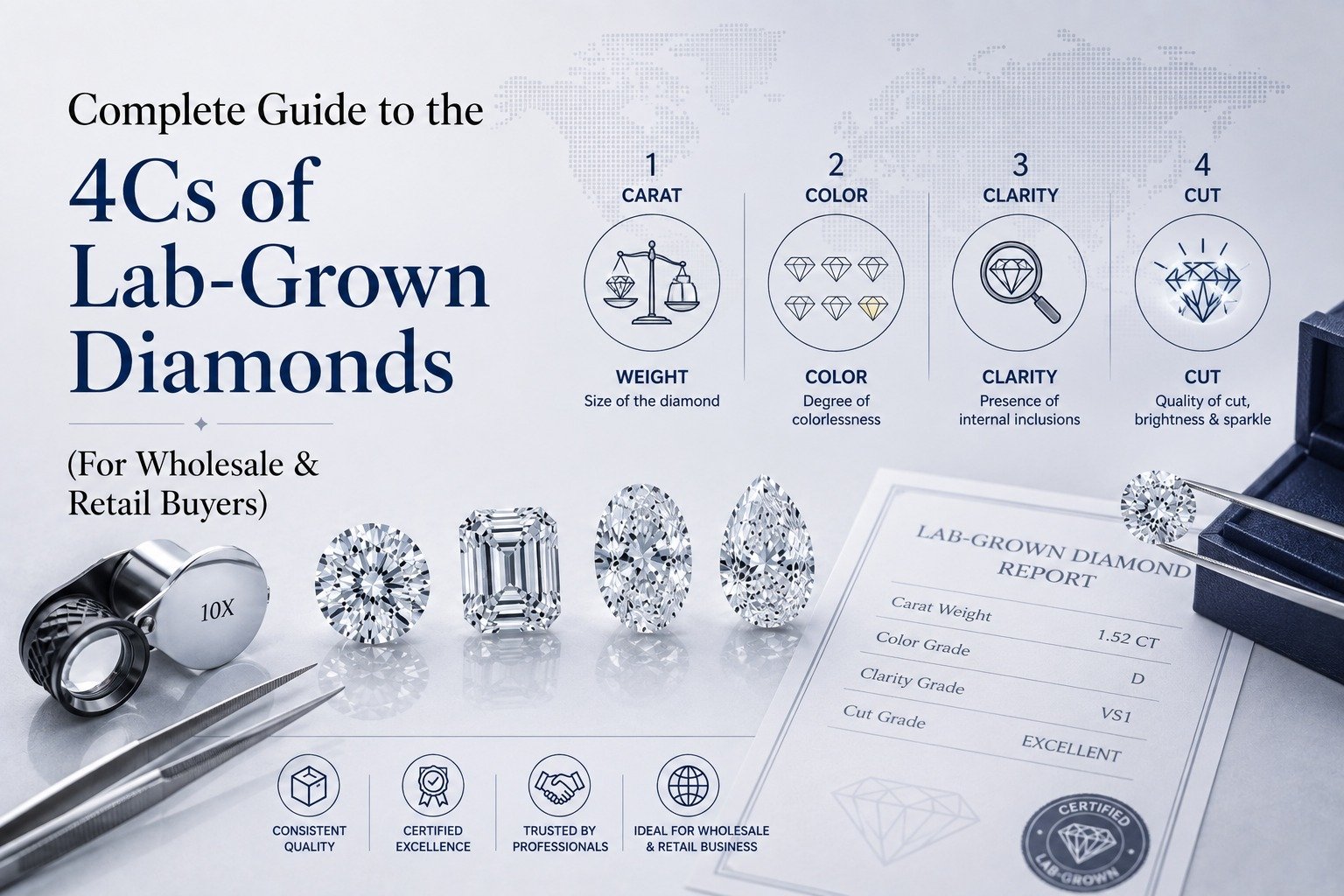
- IGI grading report certified diamonds stating color grade (Fancy Light, Fancy Intense, Fancy Vivid, Fancy Deep), clarity, cut, and carat weight. Also, GIA certificates can be prioritized.
- Treatment disclosure, stated plainly: it describes a diamond as as-grown or treated. This one line is what protects you when a customer's own jeweler or appraiser looks at the stone later.
- Origin verification. Lab-grown and mined color diamonds can look identical to the naked eye. The certificate, not the seller's word, is what confirms which one you're holding.
If a supplier hesitates on any of this, or gives you a confusing answer on treatment history, that's not a supplier you build a repeat relationship with. Price is never a reason to skip verification.
How to Select a Wholesale Colored Lab-Grown Diamond Supplier
This is where most dealers get burned, not on the first order, but on the fifth, when consistency starts to matter. Before you commit to a supplier, confirm the following:
- Parcel-to-parcel color matching. Ask them to reproduce a saturation you've already sold. If they can't match it reliably, you'll be explaining the difference to a customer standing at your counter.
- Order flexibility. You need single stones for custom work and parcels for stock, from the same source, without friction.
- Memo terms. A supplier offering diamond memo terms lets you hold stones for client approval before capital changes hands and is built for trade buyers, not walk-in retail.
- Private label lab-grown diamonds. If you're building your own brand, your supplier needs to support custom certificates and packaging without pushback.
- Delivery you can plan around. Engagement season and holiday builds don't wait. Confirm turnaround before you need it, not during a rush order.
- Manufacturer-direct pricing. Every layer of brokerage between you and the grower is margin you're giving away.
There are multiple shapes of diamonds you can consider, like princess cut, oval cut, cushion cut, emerald cut, etc. Pick what you prioritize for your jewelry stores and customers' requirements in rings, pendants, bracelets, bangles, and earrings.
Liora Diamond is built to that standard: certified fancy colored lab-grown diamonds, treatment disclosure on every stone, parcel matching for dealers reordering a color they've already sold, and terms that work for both single-stone and bulk buying. Request a wholesale price list directly through the site before your next order.
Wholesale Pricing and Margin Strategy for Colored Lab-Grown Diamonds
Fancy colored lab diamonds wholesale well below natural fancy color, often a fraction of the cost for comparable saturation and clarity. That gap is your margin. Build your pricing around these three rules:
- Vivid and Deep saturations carry the most markup room. Retail customers pay disproportionately more for visible color intensity, while your wholesale cost between Light and Vivid grades barely moves. Price accordingly.
- Pink and blue lab-grown diamonds move fastest at wholesale. Green and purple carry a scarcity premium. Fewer growers produce them consistently, so price them as the specialty items they are.
- Buy bulk lab-grown diamonds in parcels, not single stones, when you're building stock. Bundle pricing gets you a lower landed cost than sourcing piece by piece, and it's the only way to keep two saturation levels of the same color on hand.
Thus, it depends on you how to earn the trust of customers who want customized fancy-colored diamond jewelry where pricing matters.
Selling Fancy Colored Lab-Grown Diamonds: The Retail Customer Experience
Certification and sourcing get a stone into your case. What sells it is how you present it, and this is where most dealers underperform relative to the margin available to them.
Comparison closes, description doesn't.
A customer looking at one colored stone in isolation hesitates. A customer looking at a fancy light pink next to a fancy vivid pink decides, because now they can see exactly what the premium buys. Stock two saturation levels of your core colors so your team can show that contrast instead of talking about it.
Lead with the rarity gap, not the carat weight.
The moment a customer understands that a comparable natural fancy blue would run ten to twenty times the price, the conversation about paying more than a colorless diamond is over. Train your staff to open with that number, not with size or cut.
Put the certificate in the customer's hand.
Handing over the GIA or IGI report and pointing directly to the treatment disclosure line closes more sales than any pitch about sustainability. Customers are asking to see paperwork before they commit far more often than they used to; treat that as an opportunity, not friction.
Have a custom-setting path ready before you need one.
Customers buying color are far more likely to want a custom setting than customers buying standard white colorless diamonds. If your design or CAD process isn't fast, you'll lose the sale at the exact moment you had it won.
Dealers who stock comparative pairs, keep certification visible at the point of sale, and can move straight into custom setting outperform dealers who simply drop a colored stone into an existing case and wait.
Where to Buy Wholesale Fancy Colored Lab-Grown Diamonds
Fancy colored lab-grown diamonds are a margin category, a differentiation category, and a repeat-business category. But only for dealers who treat sourcing and certification as non-negotiable and who know how to sell what they stock. Get those three things right, and this is one of the strongest additions you can make to your case this year.
Liora Diamond is a wholesale colored lab-grown diamond supplier built for exactly this:
- GIA/IGI-certified stones
- Transparent treatment disclosure
- Consistent parcel sourcing
- Memo terms
- Private-label options for dealers who reorder
Request a wholesale catalog directly through the site and see what's available for your next build.
FAQs
Are lab-grown colored diamonds real diamonds?
Yes. Same chemical composition, same hardness, same optical properties as mined. The FTC classifies them as diamonds: the distinction is origin, not authenticity, and you should say so plainly to every customer who asks.
Can I buy colored lab diamonds in bulk for retail stock?
Yes. Established suppliers, including Liora Diamond, handle both parcel purchasing for stock and single-stone orders for custom client work, usually from the same account.
How do prices compare to natural fancy color?
Lab-grown runs a fraction of natural fancy color for comparable saturation and clarity. That price gap is the entire reason this category exists at wholesale scale.
Do these hold up to daily wear?
Yes. 10 on the Mohs scale, identical to mined diamonds and colorless lab-grown stones. Fully suitable for engagement rings and everyday jewelry, and you should tell customers this without hedging.
What certification is non-negotiable before buying wholesale?
A GIA or IGI report with color grade, clarity, carat, and explicit treatment disclosure — as-grown or treated — on every stone or parcel. Nothing less.
Do suppliers offer memo terms for trade buyers?
The ones worth working with do. Confirm memo terms before your first order, not after you need one. This is important for stone quality checks.
```