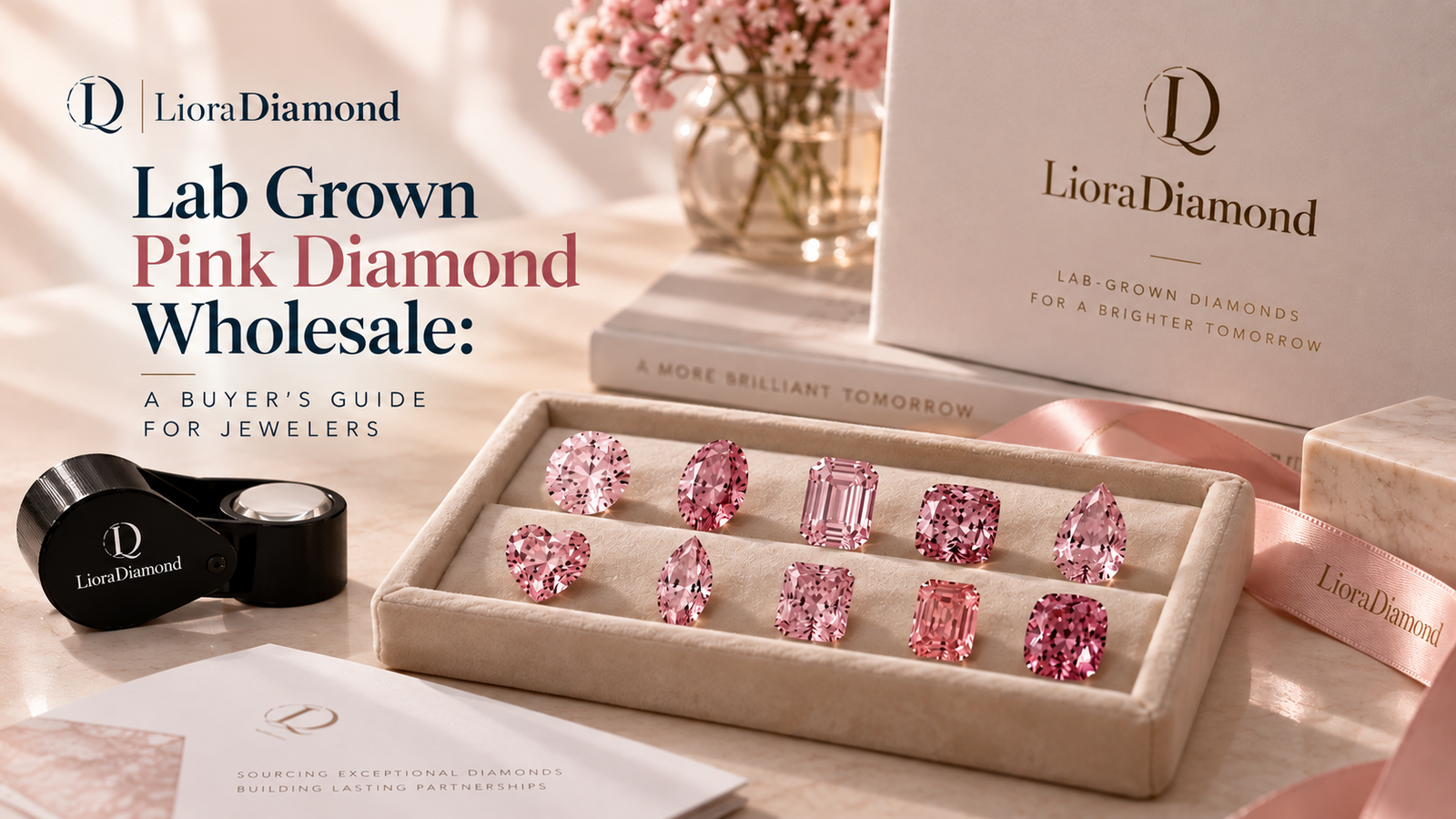
Explore lab-grown pink diamond wholesale for jewelers, from color grades and certification to pricing, quality checks, and bulk sourcing. Learn how to choose reliable pink diamond suppliers and source consistent stones with Liora Diamond worldwide.
Pink diamonds are among the most requested colored stones in fine jewelry. Natural pink diamonds have become nearly unattainable for most independent jewelers, and lab-grown pink diamonds fill that gap. Buyers get the look their customers want at a price a retail business can build a margin on.
Still, buying pink lab-grown diamonds at wholesale is not the same as buying white stones. Before purchasing bulk diamonds, understand the difference between colorless and colored diamonds. Color grading, treatment disclosure, and shape availability all affect your margins and your reputation. This guide covers what jewelers and retailers should know before placing a wholesale order.
Why Lab Grown Pink Diamonds Are a Smart Wholesale Category
Natural pink diamonds are extremely rare. The Argyle mine in Western Australia, historically the world's dominant source of pink stones, closed in 2020. Since then, natural pinks have been scarce and expensive, and top-tier stones trade at auction-level prices that most retail customers can't approach.
Lab-grown pink diamonds fill that gap with three advantages:
1. Accessible pricing. Your customers can buy a visible, wearable pink center stone instead of a tiny melee accent.
2. Consistent supply. Growers can produce stones in repeatable color ranges, making it much easier to source matched pairs and coordinated collections.
3. Strong visual appeal. Fancy pink stones photograph well and stand out in a display case, which matters for social-first retailers.
Retailers who add a fancy color program also gain a differentiator. Many jewelers still stock only white lab-grown stones, so a well-curated pink assortment gives customers a reason to choose your store.
Understand the Product: What Makes a Pink Diamond "Pink"
Lab-grown diamonds are identical to mined diamonds in every way. They are real diamonds, just grown in a controlled environment instead of formed underground. Pink color is the exception to the "grown as-is" rule for many stones.
In lab-grown production, pink color is often achieved through a combination of growth conditions and post-growth processing such as irradiation and annealing. Buyers should treat this as standard industry practice rather than a red flag, but transparency matters. Always ask your fancy color lab-grown diamond supplier:
1. Whether the color is as-grown or the result of post-growth treatment.
2. Whether the grading report discloses the treatment.
3. How stable the color is under normal jewelry wear and cleaning.
A reputable supplier answers these questions without hesitation. If they can't, look elsewhere. Vague answers put your reputation at risk, and the FTC's jewelry guides require accurate disclosure that a diamond is laboratory-grown.
Fancy Color Grading Explained
White diamonds are graded on how little color they show. Pink diamonds are graded on how much color they show and how well it appears. Fancy color grading looks at three elements:
1. Hue: The actual color family, such as pink, purplish pink, or orangey pink.
2. Tone: How light or dark the color appears.
3. Saturation: The intensity or strength of the color.
Grade descriptions typically progress from Fancy Light and Fancy to Fancy Intense, Fancy Vivid, and Fancy Deep. Fancy Intense and Fancy Vivid generally command the strongest customer response because the color reads clearly even in a finished ring with side stones.
For your wholesale fancy color lab-grown diamond buying strategy, this means a few things:
1. Fancy Light and Fancy stones suit customers who want a soft, romantic blush and a lower price. They work well in halo settings and vintage-inspired designs.
2. Fancy Intense and Fancy Vivid stones are your statement pieces. They deserve premium placement in your case and your marketing.
3. Modifiers matter. A purplish pink and an orangy pink look different in daylight, and customers have strong preferences. Stock a range so you're not limited to one look.
You can browse current inventory in our fancy color lab-grown diamonds collection or filter directly through our loose diamonds listings.
IGI Certification: Non-Negotiable for Wholesale Buyers
Certification is what turns a colored stone into a sellable, defensible product. An IGI-certified lab-grown diamond wholesale grading report protects you in three ways: it substantiates your claims to the customer, it supports insurance appraisals, and it speeds up resale and trade-in conversations.
When you buy pink lab-grown diamonds wholesale, look for stones accompanied by reports from a recognized independent laboratory. IGI is one of the most widely recognized labs in the lab-grown category, and many jewelers and consumers know the name. You can view Liora Diamond's IGI-certified lab-grown diamonds to see how we present certified inventory.
Before you order, check that the report:
1. Clearly states the stone is laboratory-grown.
2. Lists the fancy color grade and color origin or treatment information.
3. Includes carat weight, dimensions, cut grade, and shape.
4. Matches the laser inscription on the stone, where applicable.
Verify every stone against its receipt report. This takes minutes and prevents later disputes.
Choosing Shapes: What Sells in Pink Diamonds Wholesale
Diamond shape changes how pink color appears. Deeper-cut shapes hold and concentrate color, while shallower step cuts can show it more softly. Here's how the major shapes tend to perform commercially.
1. Round
Round is the most versatile shape and often the easiest to resell. Rounds maximize brilliance, which can make lighter pinks look livelier. Browse round cut lab-grown diamonds.
2. Oval
This diamond shape is elongated and trend-forward; ovals are a favorite for engagement rings and give a larger visual footprint per carat. Explore oval lab-grown diamonds.
3. Cushion
A classic choice for pink stones. The rounded corners and larger facets tend to show color richly, and cushions are a longtime favorite in the fancy color market. See cushion lab-grown diamonds.
4. Princess
The princess cut is a modern, geometric option with strong brilliance and a loyal customer base. The range runs from 1 to 5 carats, with 10+ carats available. View princess-cut lab-grown diamonds.
5. Emerald
The emerald diamond step cut showcases clarity and color saturation, and it suits customers who want a sophisticated, understated look. Check emerald lab-grown diamonds.
6. Pear, Marquise, and Heart
These fancy shapes add personality and are ideal for pendants, earrings, and custom work. Heart-shaped pink stones are especially popular for gifting and Valentine's season. Browse pear, marquise, and heart options.
A practical tip: start with round, oval, and cushion as your core, then add one or two fancy shapes based on what your customers already ask for.
Carat Weight Strategy: Build a Balanced Inventory
A common mistake in fancy color loose diamond bulk buying is over-concentrating in one size range. Pink stones behave differently at different weights, and your customer base should determine where you focus.
1. 0.50 ct and above: This is the entry point for meaningful center stones. Explore 0.50 carat and larger options.
2. 1.00 ct and above: The sweet spot for engagement rings and anniversary pieces. See 1 carat and up.
3. 1.50 ct and above: This range is noticeably more present on the hand, with strong margins on the right stones. View 1.5 carat and up.
4. 2.00 ct and above: It's available for statement stones for clients who want impact. Browse 2 carat and up.
5. 3.00 ct and above / 5.00 ct and above: It's showpiece territory, suited to special orders, high-end collections, and social media content. See 3 carat and up and 5 carat and up.
A sensible approach for most retailers is to hold a broader base of stones under two carats for everyday sales and to source larger stones as needed for specific clients. This keeps your capital working without tying up too much in slow-moving pieces.
How to Evaluate a Wholesale Supplier
Pink lab-grown diamonds are a category where supplier quality matters more than usual. Color consistency, honest disclosure, and reliable fulfillment separate a good partner from a costly mistake. Use this checklist when comparing suppliers:
1. Transparent inventory
Can you see real stone data, including grade like the 4Cs of diamonds, dimensions, and certificate details, before you commit? Live, searchable inventory saves time and reduces errors.
2. Independent certification
Reports from a recognized lab should be standard on fancy color stones, not an upsell. Prefer IGI-certified colored lab-grown diamonds for your wholesale purchase.
3. Color accuracy
Ask for high-quality images or videos taken in consistent lighting. Pink is difficult to judge from a poor photo, and a good supplier will offer additional media on request.
4. Clear terms
Understand payment terms, return windows, and memo or approval policies before you place an order for bulk colored lab-grown diamonds, not after.
5. Dependable logistics
Insured, tracked shipping and clear timelines protect both sides. Review our shipping policy for details on how we handle orders.
6. Domestic support
A U.S.-based partner simplifies communication, returns, and compliance. Learn more about working with a lab-grown diamond supplier in the USA.
Pricing and Margin: What Jewelers Should Expect
Wholesale pricing for pink lab-grown diamonds varies widely based on color grade, carat weight, shape, clarity, and certification. The most important pricing principle is that color grade drives value more than any other factor in the fancy color category. A stone with a stronger, cleaner pink will usually price well above a lighter stone of the same size.
To protect your margins:
1. Buy against demand, not against a discount. A cheap stone that doesn't match what customers want becomes dead inventory.
2. Compare stones at the same grade and size. Fancy color pricing is not linear, so like-for-like comparison is essential.
3. Factor in setting choices. A halo of white lab-grown accent stones can make a lighter pink appear more vivid, letting you offer a lower-cost center stone without a weaker result.
4. Ask about volume pricing. Retailers who commit to recurring orders often qualify for better terms, so tell your supplier about your buying plans.
Ready to Build Your Pink Diamond Program?
Choosing the right supplier is the single biggest factor in whether a pink lab-grown diamond program becomes a profit center or a source of headaches. With the right bulk diamond partner, you get consistent quality, transparent grading, and inventory that matches what your customers actually want to buy.
If you're ready to source pink lab-grown diamonds wholesale, we'd like to help you build an assortment that fits your store, your customers, and your budget. Whether you need a handful of stones to test the category or a larger recurring order, our team can help you select stones by shape, color grade, and carat weight.
Contact Liora Diamond's team today to request wholesale pricing, ask about current pink inventory, or discuss a custom sourcing plan. You can also explore our full range of fancy color lab-grown diamonds before you reach out.
Pink is a category where early movers win. Get in touch, and let's put the right stones in your case.
FAQs
1. Are lab-grown pink diamonds real diamonds?
Yes. They have the same chemical composition and crystal structure as mined diamonds. The difference is origin: they are grown in a laboratory, and suppliers must disclose that at the time of sale.
2. Is the pink color in lab-grown diamonds natural?
Pink color in lab-grown stones is often produced or enhanced through post-growth processing. Reputable suppliers disclose this, and independent grading reports should reflect it.
3. What is the best pink grade to stock?
It depends on your customers. Fancy Intense and Fancy Vivid stones make strong statement pieces, while lighter grades appeal to budget-conscious shoppers. A mix of both usually performs best.
4. Do you sell to independent jewelers?
Yes. Independent jewelers, designers, and retail chains are central to our wholesale program. You can start the conversation through our B2B contact page.
5. How can I verify a stone before buying?
Ask for the grading report, high-resolution media, and the stone's laser inscription details. Compare everything against the certificate number.